Guide: Dr. Venkataraman Pandurangan, IIT Tirupati
[May'22 - Sept'22]
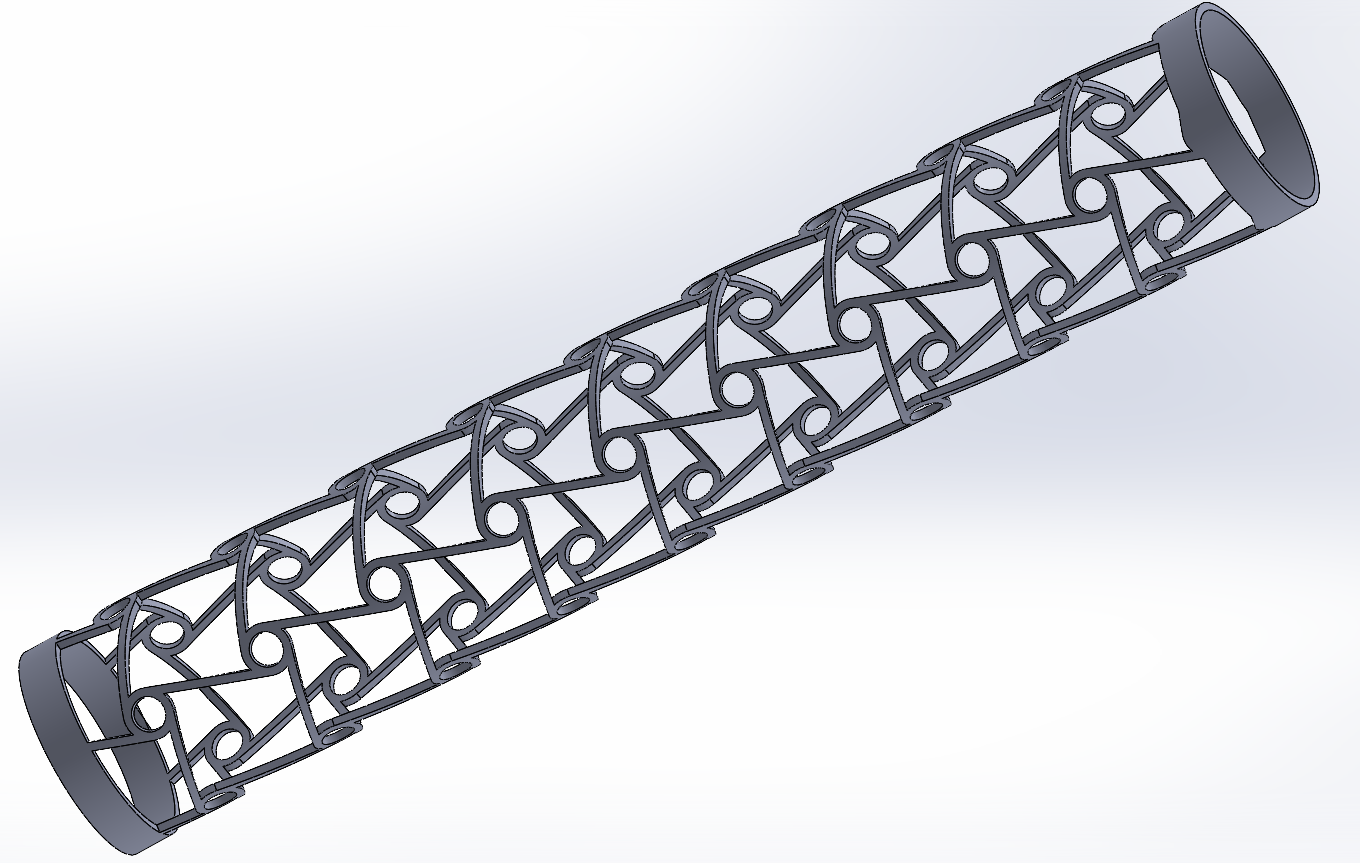
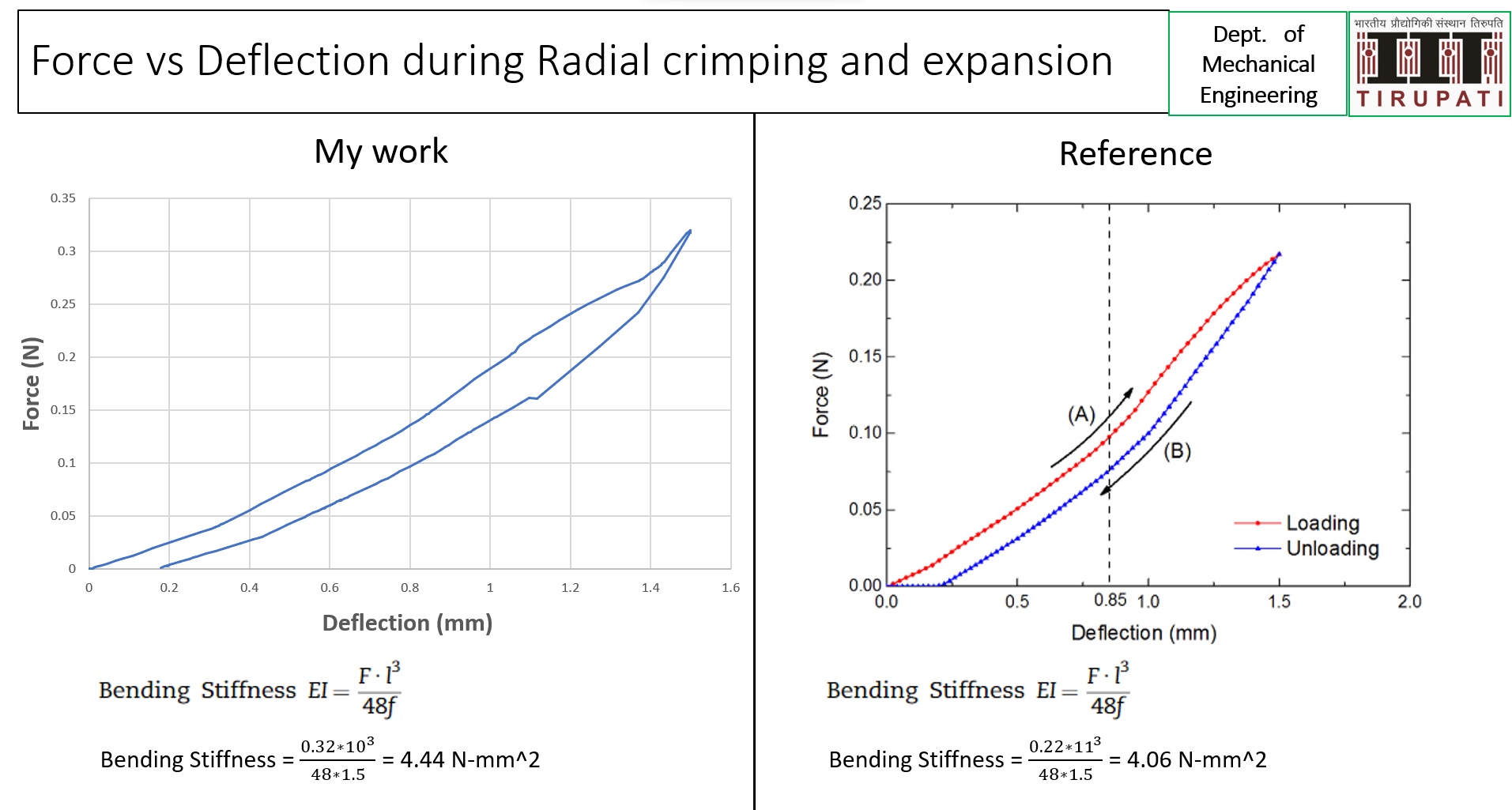
In this project, I conducted finite element analysis (FEA) simulations on a tetrachiral auxetic stent with varying ratios of node radius and length. The primary objective was to evaluate the mechanical behavior of the stent under various loading conditions, including 3-point bending, torsion, crimping, and expansion. These simulations aimed to optimize the stent's design for improved patient outcomes by ensuring it could withstand the mechanical stresses encountered within the human body.
Key Components:
- Finite Element Analysis (FEA): FEA is a powerful computational method used for analyzing the behavior of complex structures under various mechanical loads. It allows for detailed simulations of deformations, stresses, and strains, making it a valuable tool for optimizing medical devices like stents.
- Tetrachiral Auxetic Stent: The focus of the analysis was on a specialized tetrachiral auxetic stent. These unique stents have a four-fold chiral structure that imparts them with unusual mechanical properties, such as negative Poisson's ratio. This innovative design was a key component of the project.
Project Highlights:
- Conducted detailed FEA simulations on the tetrachiral auxetic stent under 3-point bending, torsion, crimping, and expansion conditions to assess its mechanical performance.
- Evaluated various node radius and length ratios to identify the most optimal design parameters for the stent.
- Provided insights into how the stent responded to different mechanical loads, enabling the refinement of its design for enhanced patient safety and effectiveness.
Conclusion:
This project underscores the significance of computational analysis in medical device design and optimization. The utilization of FEA simulations allowed for a comprehensive evaluation of the tetrachiral auxetic stent's mechanical behavior, leading to informed design improvements. Ultimately, this work contributes to the development of safer and more efficient medical stents, which can have a profound impact on patient outcomes and well-being.